Are you in the right place? Probably not.
The story goes that in 1942 Albert Einstein was teaching at Oxford University.
One morning he set a physics exam for the final-year students.
That afternoon, as he was walking across the campus with one of his assistants, the assistant suddenly turned to him and said:
Dr. Einstein, isn't the exam you just gave the final-year physics students exactly the same exam you gave the same class last year?
Yes, yes,
said Albert Einstein, it is exactly the same.
But, Dr. Einstein, how can that be?
said the assistant.
Well,
said Einstein, the answers have changed.
The answers have changed.
And if that was true in 1942, it is all the more true today.
We live in a world where the questions may well be the same, but it is the answers that keep changing.
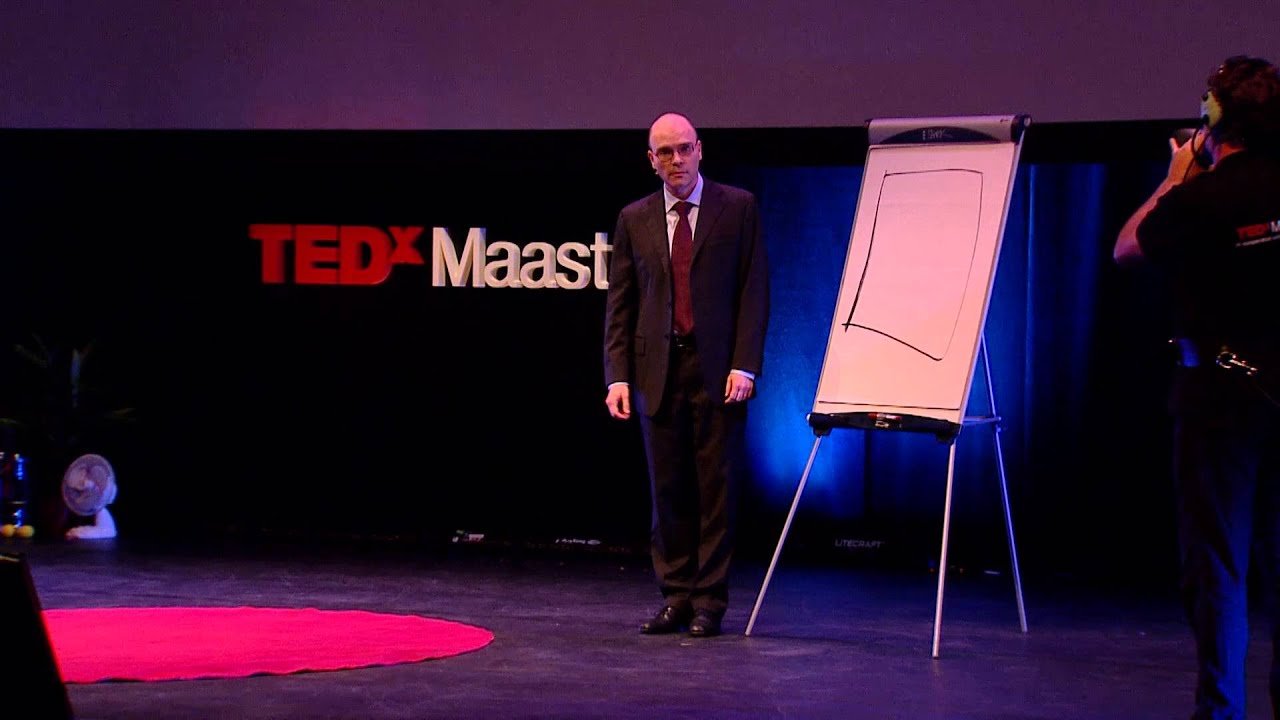
Want to know how the story continues? Watch the video.
Starting from here, consider the possibility that there are better ways to make your business grow. Safer methods to make the most of your opportunities. Faster, more predictable roads to a better experience for you and the people around you.
The road everyone
takes is not always the best one to reach a given goal.
Let me try a simple explanation: think of the time it takes a new idea to spread, to be understood and then adopted.
If you are among the first to follow it, fine.
If instead many people (or everyone
) are already using it, for you that idea is already obsolete.
Because starting from the back will certainly give you no advantage.
We live in a world where the questions may well be the same, but it is the answers that keep changing.
Every result has to be built through a strategy that renews itself over time, and through a process shaped by your character, by the way you deal with people, by your resilience in the face of obstacles.
If reaching a goal depends on such personal traits, it is also likely
that the road that suits many people does not fit your way of seeing and doing things.
So consider, too, that to adapt a road to your needs
you might even end up turning it upside down.
Is there a trick?
How can you always choose the most effective road?
How can you be sure you are getting the best out of every situation?
Is there a trick?
Have you studied [the name of some theory they have heard of]?
Many people have inspired the conclusions I have reached and...
Yes, there is a trick
... if we really want to call it that.
And it is a trick people tend not to see (of course, otherwise what kind of trick would it be?).
And when they do see it, they cannot fully understand it.
And not understanding it, they try to describe it in all sorts of ways...
You are a genius...
You are the smartest person I have ever met...
You are a magician...
Or they simply admit their difficulty and ask: How do you do it?
The most important thing I have discovered over the years is that the trick
can be learned.
Mastering this modus operandi
will give you a cognitive advantage and an uncommon ability to make decisions.
How?
Start by imagining how wonderful it would be if, instead of thinking for hours or days in front of a situation, you could simply sense the best choice to make.
Now imagine that this intuition of yours is not the result of some esoteric hint
or inspiration
,
but comes from a whole chain of reasoning you went through extremely fast.
Now imagine how others would see you as you give an answer that is not only immediate but decisive to a problem that, for them, is or seems extremely hard.
I have just described, for example, someone who solves a Rubik's cube in 8 seconds in front of an audience,
or someone who works out in their head the result of a division between two large numbers.
Or someone who, with a single sentence, gives you the idea for an entire marketing campaign.
They are people who found it easy to develop a talent of theirs, and did so.
But consider that, had they not trained to develop it over time, talent alone would not have been enough.
In general there will always be things that come easily to you and others that come less easily. In both cases, commitment and perseverance will make the difference.
What is intuition?
With that settled, I will go back to defining the trick
more precisely because, at this early stage,
it is important to work on words and build a common language.
I will let my classical studies help me...
Philosophers, Kant among them, have investigated the nature of intuition.
The idea behind the word evolved over time, until, closer to our own time,
Carl Gustav Jung defined it, in essence, as a perception that takes place through the unconscious:
the mind grasps what the facts alone do not show.
I can intuit
why Jung defined it this way.
When you present a theory you have to write it so that most people can understand it and, at the same
time, you leave a small open space
outside the definition, something readers can recognize
from their own experience.
Being too didactic in describing an event or an experience prevents readers from reliving it or reinterpreting it in their own way.
And if they cannot relive it, they will resist understanding it.
An open variable is the door that any far-sighted person, when stating something, tends not to close with a precise definition.
I take Jung's idea further by working precisely on the part left open to the reader's interpretation
, on the word unconscious
.
Simplifying a little, from my own reflections I can say that the unconscious
is a conscious process of your brain carried out extremely fast.
That is all. No mystery.
In practice you can see the unconscious as the fast part of your conscious processes.
It is you, with all your experience, only faster.
So fast that often you are not even aware that a mental process took place.
So fast that sometimes you explain it with the word intuition
, and other times with that's just how I am
.
Let me add one more piece.
At this point, in fact, it becomes easy to understand what instinct is.
You only need to add the word programmed
.
Instinct is an unconscious process programmed beforehand.
I know I am opening up a whole world, and that thousands of questions would need an answer.
That is natural. I asked them myself, and I spent years looking for a pattern that would answer them.
These few simple words are the result of an endless series of reflections and failed arguments that led me
to define a whole philosophy of human behavior.
I do not know whether, here and now, there is room and a way to explain how I reached certain conclusions,
but I can promise you one thing: if you keep reading and understand the fundamental concepts
I will describe, you will be able to answer all these questions yourself.
After all, you do not need to understand a tool to use it well: some people have written masterpieces
without knowing how or why their typewriter or their computer worked.
End of the digression: now I will go back to giving a more precise definition of the word intuition
.
Intuition is a series of broad considerations that let you analyze a situation from different points of view and assess which is the best possible choice in the context you are examining.
All in a few moments...
Sometimes immediately.
Sometimes days later, perhaps while you were thinking about something else.
I will now draw some conclusions that may seem obvious to you.
Considerations made intuitively can also be reached through longer reasoning.
In both ways, intuitive and reasoned, you can come to the same conclusion.
From this you can easily deduce that, the destination being the same, the advantage of an intuition is not only
that it saves you time and energy.
In fact, intuitions can also come one after another, and let you assess several things in the same time
someone else spends assessing just one.
By training your reasoned processes you can speed them up to the point of turning them into intuitions.
You have to start understanding your processes of analysis, and to question them when they lead you nowhere.
You have to learn to study your reactions.
You have to study why deeper reasoning leads you, today, to a better analysis.
You have to redefine your goal for growth.
You have to learn to make some of your conscious processes unconscious.
Only this way will you be able to assess complex situations in a few moments, analyzing facts,
imagining consequences and creating connections that will lead you to an effective pattern for a solution.
Why?
I will start from the end: from the finish line to cross, from the goal to reach and from its cost.
Learn to ask yourself better questions, so you can fully understand a situation.
The cost of this process?
Your commitment, for as long as it takes.
Where to begin?
I think we can both agree that Why?
is the simplest question to start from.
In fact, it is probably the question your brain was asking
even before you could say your first word.
Why
is the cornerstone question.
It is the milestone of our cognitive evolution.
Answering the whys
is the process that made us progress throughout our history.
There is good news right away.
You do not need to learn to ask yourself why things are the way they are. You already know how.
Your first step is to keep asking yourself why, even about answers already given.
As time goes by, this is one of those qualities you will tend to use less and less.
You will learn, in fact, to rely more and more on experience, no longer considering changes of context as relevant.
The clearest example is taste. As a child you learned to enjoy some foods and to refuse others.
Then, as an adult, perhaps tasting it by chance, you find that a dish you did not like starts to appeal to you.
Why does it happen? The food is the same.
And if the food is the same, then what changed is you, or the context in which you are eating it.
Context?
I will have a chance to explain properly what I mean by this word; for now, imagine that sometimes a particular situation can favor certain conclusions.
For example, a cold pizza and a warm beer
can seem tastier when who
you are sharing them with matters more than what
you are eating.
Being aware of your changes, or of changes in context, will help you judge better whether or not to rely on your experience.
Analyzing situations with ever more accurate tools, you will find it easier to spot a pattern.
Once the pattern is found, your experience will match it with all the similar patterns you have already solved, giving you a range of options.
The number of options available will help your choices and lead you quickly to a strategy that solves the situation you are examining.
The most important thing to consider is that experience will often lead you to evolve your answers, and almost never your questions.
It is one of the mistakes that, over time, have surely helped slow down your growth.
The key, as I said, is learning to ask yourself better questions.
Getting better answers will now be only a consequence, no longer the goal.
So keep in mind that as you grow, if you want to improve your cognitive perception, you have to evolve your questions while trying to keep your answers simple.
This way you will learn to analyze a situation in depth with tools you probably do not yet know you have.
You will improve your cognitive perception through exercises that train your mind
to carry out long and highly analytical processes quickly.
You will learn to ask yourself questions that simplify the answers and lead to decisive solutions.
Blue pill or red pill?
Now... to paraphrase a famous choice:
Blue pill: you close this page and the story ends; tomorrow all of this will probably not even be a memory.
Red pill: you turn the page, enter Wonderland, and discover how deep the rabbit hole goes.
What the caterpillar calls the end of everything, you call a butterfly.